
Freeze Warning in Southeast Louisiana: How to Protect Your Pipes (Hammond, Covington, Mandeville & New Orleans)
When temperatures drop below freezing in Southeast Louisiana, plumbing problems spike fast—especially in homes with exposed piping, crawlspaces, exterior walls, garages, and older shutoff valves. If you’re in Hammond, Covington, Mandeville, or New Orleans, a few simple steps tonight can prevent burst pipes, water damage, and an emergency call at the worst possible time.
Below is a clear, homeowner-friendly freeze checklist, what to do if a pipe freezes, and what to do if a pipe bursts.
FAST “TONIGHT” CHECKLIST (DO THIS BEFORE BED)
If you only have 10 minutes tonight, do these 7 things:
- Disconnect every garden hose and drain it
- Cover every exterior hose bib/spigot with an insulated cover (or wrap with a towel + plastic bag as a temporary fix)
- Open cabinet doors under sinks on exterior walls (kitchen and bathrooms)
- Drip ONE cold faucet (and hot if you have exposed hot lines) if temps stay below 32°F for hours
- Wrap exposed pipes in garages, carports, attics, and crawlspaces
- Make sure your water heater area is warm enough and that exposed piping at the heater is insulated
- Locate your main water shutoff and make sure you can turn it
Why Freezes Hit Louisiana Homes Hard
Most local homes and plumbing systems aren’t built for long, hard freezes. The biggest issues we see are:
- Exposed piping in carports, garages, attics, and crawlspaces
- Water lines run through exterior walls (kitchen/bath walls)
- Hose bibs/faucets not freeze-protected
- Thin insulation or missing pipe insulation at key points
- Irrigation/backflow lines not winterized
- Tankless water heater lines left exposed
The goal is simple: stop cold air from reaching the pipe, and keep a small amount of water moving when temps stay below freezing.
Freeze Protection Checklist (Do This Before the Coldest Night)
1) Cover Exterior Faucets (Hose Bibs)
- Install an insulated faucet cover on every exterior spigot
- Disconnect hoses (a connected hose traps water and makes freezing more likely)
- Shut off and drain hose bibs if you have an interior shutoff for them
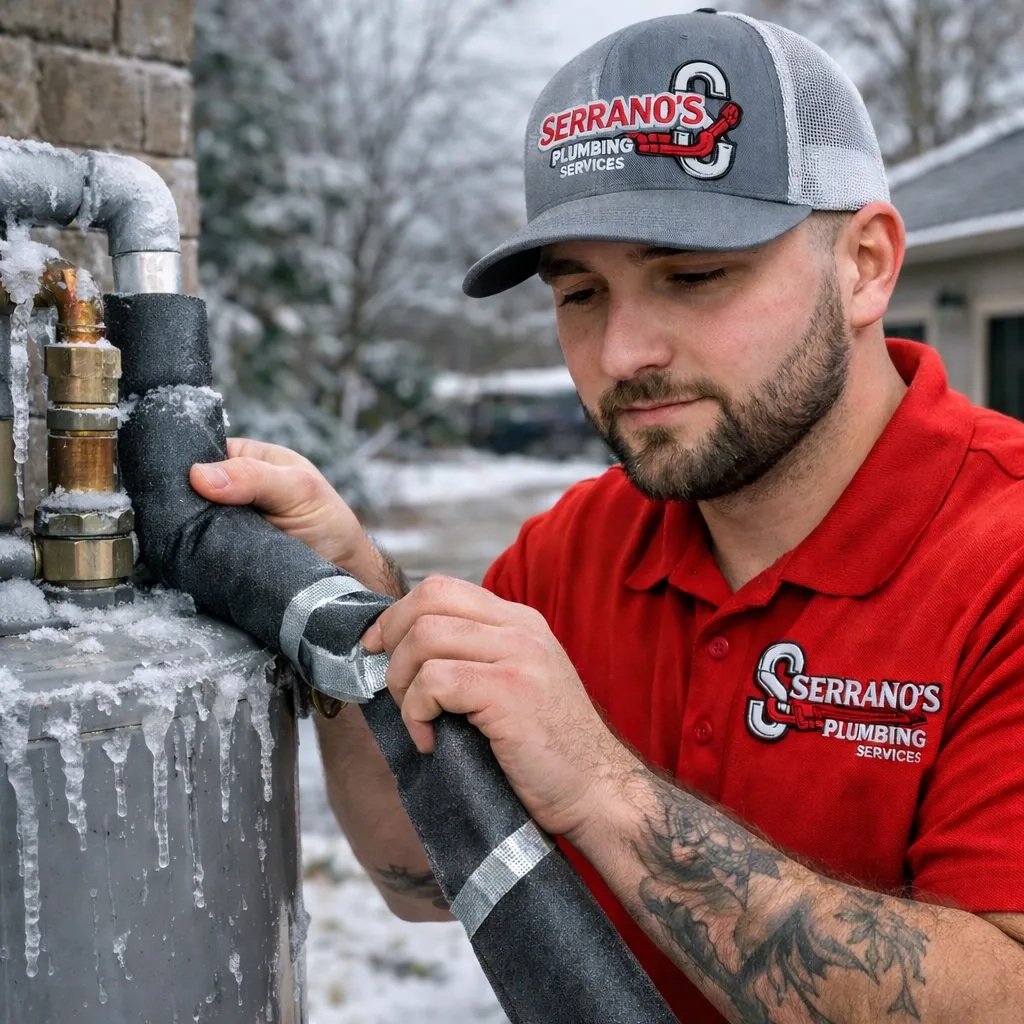
2) Insulate Exposed Pipes
Focus on:
- Pipes in the garage/carport
- Pipes under sinks on exterior walls
- Crawlspace lines and main water line entry point
- Water heater pipes and exposed lines
Use foam pipe insulation sleeves and seal gaps where pipes enter walls. Small air leaks can freeze a pipe even if it’s “kind of insulated.”
3) Seal Cold Air Leaks
- Close crawlspace vents (if applicable) during the freeze
- Seal holes around pipes with foam/caulk
- Keep garage doors closed as much as possible
4) Open Cabinet Doors Under Sinks (Exterior Walls)
This lets warmer indoor air circulate around the piping. Do this especially for kitchen sinks and bathroom vanities on outside walls.
5) Drip Faucets (Only When It’s Truly Freezing for Hours)
If temps will stay at/under 32°F for several hours:
- Drip the hot AND cold side at the farthest fixture from the main shutoff
- A pencil-lead-sized drip is enough—steady drip, not a stream
- If you have a tankless, dripping a hot faucet can help keep flow through the unit
Note: Dripping is a backup plan—insulating and sealing is the better long-term fix.
6) Protect Tankless Water Heaters
Tankless units are more sensitive in a freeze:
- Make sure the unit has power (freeze protection features can’t work without power)
- Insulate exposed exterior lines and valves
- If a hard freeze is coming and your tankless is on an exterior wall, consider dripping a hot faucet overnight
7) If You’re Leaving Town
Best options:
- Keep heat on (at least 62–65°F)
- Shut off the main water and drain down the system if you know how (or have a plumber do it)
- Have someone check the house if possible
Neighborhood-Specific Notes (Hammond, Covington, Mandeville & New Orleans)
Freeze risk is higher in certain setups we see often across Southeast Louisiana:
- Raised homes / crawlspaces: cold wind under the home can freeze lines quickly
- Homes with garage laundry: washer lines and valves freeze fast
- Exterior wall plumbing: kitchen sinks and master vanities on outside walls are common freeze points
- Older properties: shutoff valves may not fully close, and insulation is often thin or missing
- Tankless setups: exterior valves/lines can freeze even when the unit has protection (especially if power is lost)
If you’ve had low pressure in the past during cold snaps, that’s a sign you have an exposed section worth insulating now.
How to Tell If a Pipe Is Freezing
Warning signs:
- Water pressure dropping at one fixture
- Only a trickle comes out, then nothing
- A section of pipe is visibly frosted or extremely cold
- You hear odd cracking/popping near piping
Most burst pipes don’t burst while frozen—they burst when the ice starts to thaw and pressure has nowhere to go.
What To Do If You Lose Water Pressure (Do This First)
If you turn on a faucet and you suddenly have little/no water:
1) Check if it’s only one fixture or the whole house
2) Look for a frozen section in the garage/crawlspace/exterior wall areas
3) Open the affected faucet slightly (a small trickle)
4) Warm the pipe slowly with a hair dryer or gentle heat (no torch)
5) If you see swelling, cracking, or water, shut off the main immediately
If pressure doesn’t return quickly, or you can’t locate the freeze, it’s safer to shut off the main and get help before it turns into a burst line and water damage.
What To Do If a Pipe Freezes (Step-by-Step)
1) Keep the faucet open (a small trickle)
Open the faucet fed by the frozen line. This relieves pressure as the ice loosens.
2) Warm the pipe safely
Use:
- A hair dryer
- A space heater aimed toward the area (keep it safely away from combustibles)
- Warm towels wrapped around the pipe
Start warming near the faucet end and work back toward the frozen section.
Do NOT use:
- Open flame (torch/lighter)
- High-heat direct methods that can damage pipe materials or start a fire
3) If you can’t locate the freeze or it won’t thaw
Shut off the water and call a plumber. Hidden freezes in walls/crawlspaces can turn into a flood quickly.
What To Do If a Pipe Bursts
1) Shut off the main water immediately
If you don’t know where your main shutoff is, find it now—before the freeze hits.
2) Turn off your water heater (if needed)
- Electric: turn off the breaker
- Gas: set to pilot/off depending on your setup
This prevents damage if the tank runs dry.
3) Open faucets to drain pressure
Open cold and hot faucets to reduce pressure in the system.
4) Call a plumber and start drying the area
Water damage gets expensive fast. The sooner you stop the flow, the better.
Most Common Freeze Problem Areas in Southeast Louisiana
- Under-sink angle stops and supply lines on exterior walls
- Hose bibs and wall hydrants
- Main line entry point at the exterior wall
- Laundry lines in garages
- Tankless isolation valves and exterior lines
- Shallow yard lines feeding detached buildings
- Older homes with minimal wall insulation and exposed runs
Freeze-Prep Inspection (Peace of Mind)
A quick inspection can identify:
- Exposed/at-risk piping
- Missing insulation
- Weak shutoff valves
- Hose bib issues
- Tankless line vulnerabilities
- Crawlspace and exterior wall risk points
It’s much cheaper to prevent a freeze break than to repair walls, flooring, cabinets, and mold.
Need Help Tonight or During the Freeze?
If you’re in Hammond, Covington, Mandeville, or New Orleans and you need help winterizing, diagnosing a freeze, or repairing a burst line, Serrano’s Plumbing Services is ready to help.
Serrano’s Plumbing Services — Serving to the highest degree.
Emergency service available 24/7.
Service Areas for Freeze Prep & Emergency Plumbing
We provide freeze-prep help and emergency plumbing service across:
Hammond | Covington | Mandeville | New Orleans
If you need professional plumbing help in Southeast Louisiana, visit our Serrano’s Plumbing Services homepage to learn more about our repair and installation services.
Quick FAQ
Q: Should I drip every faucet in the house?
A: Usually no. Drip the farthest fixture from the main and any fixtures on exterior walls if temps stay freezing for hours. Insulation and sealing air leaks are more effective long-term.
Q: Should I turn off my water overnight?
A: If you’re very worried and know how to do it correctly, shutting off the main and draining the system is the safest. If you’re not sure, keep heat on and protect exposed piping instead.
Q: Will pipe insulation alone prevent freezing?
A: Not always. Insulation helps, but wind/cold air leaks can still freeze a line. Seal gaps and block cold air access.
Q: Are PEX pipes “freeze-proof”?
A: PEX is more flexible than copper, but it can still burst—especially at fittings and valves. Don’t rely on material alone.