Choosing the right water heater matters more than most homeowners realize. In Southeast Louisiana, your water heater has to handle daily showers, laundry, dishes, high humidity, hard working plumbing systems, and in many homes, older utility setups that may not have been updated in years.
The three most common options are gas water heaters, electric water heaters, and tankless water heaters. Each one can be a good fit depending on the home, the utility setup, the family’s hot water demand, and the homeowner’s long-term goals.
At Serrano’s Plumbing Services, we repair, replace, and install water heaters throughout Southeast Louisiana, including the North Shore, South Shore, and Greater Baton Rouge areas. This guide explains the difference between gas, electric, and tankless water heaters so you can understand which option may make the most sense for your home.
What Is a Gas Water Heater?
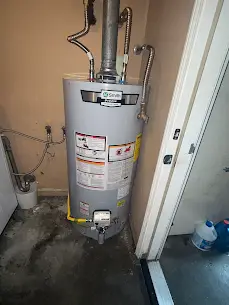
A gas water heater uses natural gas or propane to heat water inside a storage tank. Most traditional gas water heaters have a burner at the bottom of the tank, a gas control valve, a venting system, a temperature and pressure relief valve, and water connections at the top of the unit.
Gas water heaters are very common in Louisiana homes, especially in older houses and homes that already have natural gas service.
For many homeowners, gas is popular because it can heat water faster than a standard electric tank and may recover quicker after heavy use. That means if multiple people are showering, washing clothes, or using hot water back to back, a properly sized gas water heater can usually keep up better than many standard electric tank units.
Gas water heaters are often a good fit for homes that already have natural gas service, proper venting, a safe gas line connection, room for a standard tank, and a family with moderate to heavy hot water usage.
However, gas water heaters also need proper installation. The gas line, shutoff valve, sediment trap, vent connection, temperature and pressure relief line, expansion tank requirements, and water heater pan setup all matter. A bad gas water heater installation can create safety issues, venting problems, leaks, and code concerns.
If your home already has a gas water heater and you are looking for repair or replacement, visit our Gas Water Heater Services in Southeast Louisiana page.
Pros of Gas Water Heaters
Gas water heaters are popular because they usually provide strong hot water recovery. They are often a solid choice for families that use a lot of hot water throughout the day.
Some benefits include faster recovery than many standard electric tanks, good performance for families, common replacement options in Louisiana homes, strong availability in many sizes and models, and dependable service when the home already has the correct gas and venting setup.
A gas water heater can be a strong choice when the home already has the right utility setup and the homeowner wants reliable tank-style hot water.
Cons of Gas Water Heaters
Gas water heaters are not always the best choice for every home. They require more safety considerations than a simple electric tank because they involve combustion, gas piping, and venting.
Common concerns include gas valve problems, pilot light or ignition issues, burner assembly problems, venting issues, carbon monoxide safety concerns if improperly vented, sediment buildup inside the tank, leaking tanks, and code upgrades during replacement.
When we replace a gas water heater, we do not just swap the tank and leave. We look at the full setup: the water shutoff, gas shutoff, gas flex, sediment trap, venting, pan, drain line, expansion tank, pressure concerns, and overall code compliance.
That is important because a water heater replacement should leave the home safer, cleaner, and more reliable than it was before.
What Is an Electric Water Heater?
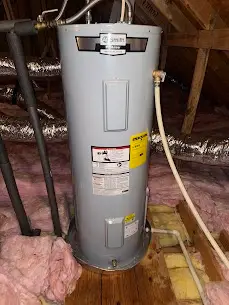
An electric water heater uses heating elements inside the tank to heat the water. Instead of a gas burner and vent, the unit relies on electricity. Electric water heaters are common in homes without natural gas, apartments, smaller homes, and areas where the electrical setup makes more sense than running gas.
Electric water heaters are usually simpler from a venting standpoint because they do not need a flue pipe or combustion air. That can make them a practical option in tight closets, laundry rooms, utility rooms, and interior areas where venting a gas unit would be difficult.
Electric water heaters are often a good fit for homes that do not have natural gas, already have the correct electrical circuit, need a standard tank replacement, have moderate hot water demand, and want a simpler vent-free setup.
If your home has an electric water heater and you need repair or replacement, visit our Electric Water Heater Services in Southeast Louisiana page.
Pros of Electric Water Heaters
Electric water heaters are often straightforward and dependable when installed correctly. They do not require gas piping or exhaust venting, which makes them useful in homes where gas is not available or not practical.
Benefits include no gas line required, no flue vent required, common use in all-electric homes, usefulness in utility closets and interior spaces, simpler combustion safety concerns compared to gas, and widely available replacement parts.
Electric tanks can be a good choice for homeowners who want a standard replacement and already have the correct wiring in place.
Electric Water Heater Upgrade Options: Standard Electric vs SMCE/XR Models
Not every electric water heater is the same. A basic electric tank can be a solid replacement option when the home already has the correct wiring and the homeowner wants a simple, dependable setup. But for homeowners who want a better electric option without converting to gas or tankless, upgraded electric water heater models can be a strong option.
One electric upgrade we like is the SMCE/XR style of electric water heater because it gives homeowners a more advanced option than a basic traditional electric tank. In the right home, this type of upgraded electric model can provide a familiar tank-style setup while offering better performance, better protection, and a more modern system than a standard electric water heater.
That is why we do not always look at electric water heaters as just the basic option. Some homes are not the right fit for gas or tankless, but that does not mean the homeowner has to settle for the most basic electric tank available.
Later, we will break this down deeper in our dedicated electric water heater guide, including when an SMCE/XR style electric model makes more sense than a normal traditional electric tank.
Cons of Electric Water Heaters
The biggest downside of many electric tank water heaters is recovery speed. Once the stored hot water is used up, it may take longer to reheat compared to a properly sized gas unit.
Common electric water heater issues include burned out heating elements, bad thermostats, tripped breakers, wiring issues, sediment buildup, leaking tanks, slow recovery, and not enough hot water.
Electric water heater replacement also needs to be done carefully. The wiring, breaker size, disconnect, grounding, pan, drain line, expansion tank requirements, shutoff valve, and pressure conditions all need to be checked.
A water heater may look simple from the outside, but the system around it matters.
What Is a Tankless Water Heater?
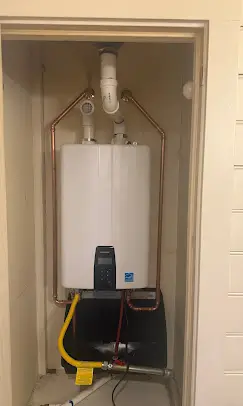
A tankless water heater heats water on demand instead of storing hot water in a tank. When someone opens a hot water fixture, the tankless unit senses flow, activates, and heats the water as it passes through the unit.
The biggest advantage is that a properly sized tankless water heater can provide continuous hot water. Instead of running out of hot water after one or two long showers, the system keeps heating water as long as the unit is properly sized, properly installed, and supplied with the right gas, water, venting, and power setup.
If you are interested in upgrading from a tank to a tankless system, visit our Tankless Water Heater Services in Southeast Louisiana page.
Why Tankless Water Heaters Are Different
Tankless systems are not just smaller water heaters. They are a different type of installation.
A tankless conversion may involve rerouting hot and cold water lines, upgrading or modifying gas piping, adding or changing electrical supply, installing PVC venting on condensing models, adding condensate drainage, mounting the unit properly on the wall, checking water pressure and flow rate, installing flushing and isolation valves, and setting up recirculation if desired.
This is why tankless water heater installation should be handled by someone who understands both the plumbing and the manufacturer requirements. The unit itself matters, but the installation matters just as much.
A great tankless unit installed poorly can create problems. A properly installed tankless system can be one of the best upgrades a homeowner can make.
Tankless Water Heater Brands: Navien, Rinnai, Rheem, and Others
There are several major tankless water heater brands, including Navien, Rinnai, Rheem, Noritz, A. O. Smith, and Bradford White. Different plumbers have different preferences depending on the application, parts availability, warranty support, venting options, and the features built into the unit.
At Serrano’s Plumbing Services, one of our favorite tankless systems to install is Navien, especially the Navien NPE-A2 series.
The reason is simple: Navien offers high-efficiency condensing tankless units with built-in recirculation technology on certain models. That built-in recirculation feature is one of the biggest reasons we like installing Navien tankless water heaters for homeowners who want more than just endless hot water.
With the right setup, a Navien tankless system can help provide continuous hot water and much faster hot water delivery at the fixtures that matter most.
That is a major difference.
Unlimited hot water means the unit can keep producing hot water on demand.
Instant hot water means the system is designed so hot water gets to the fixture faster instead of making the homeowner wait while cold water clears out of the line.
Those are two different things, and that is where recirculation can make a big difference.
When a Navien tankless water heater is installed with a proper recirculation setup, such as a dedicated return line or a crossover-style recirculation valve or recirculating rod where appropriate, the home can get much closer to true instant hot water.
Rinnai also offers strong tankless water heater options and recirculation features on certain models. Rheem also makes popular tank and tankless water heaters that can be a good fit in certain applications. But when a homeowner wants a premium tankless setup with built-in recirculation features, Navien is one of the systems we like because it gives us strong options for comfort, efficiency, and installation flexibility.
Tankless Does Not Always Mean Instant Hot Water Automatically
This is one of the biggest things homeowners misunderstand.
A tankless water heater gives you hot water on demand, but that does not always mean hot water appears instantly at every faucet.
If the tankless unit is far away from a bathroom, kitchen, or laundry area, the cold water sitting in the pipe still has to move out before hot water reaches the fixture. That wait time depends on the plumbing layout, pipe distance, pipe size, fixture flow rate, and whether the home has a recirculation system.
That is why recirculation matters.
With the right Navien tankless model and the right recirculation setup, the system can help reduce wait time and make the home feel much more comfortable. This is especially helpful in larger homes, homes with long plumbing runs, master bathrooms far from the utility room, and families that use hot water at predictable times.
So when we talk about a tankless upgrade, we are not just talking about hanging a box on the wall.
We are talking about designing the hot water system around how the homeowner actually uses the house.
Gas vs Electric vs Tankless: Which One Is Best?
There is no one-size-fits-all answer. The best water heater depends on the home.
A gas water heater may be best if the home already has natural gas, proper venting, and a family that needs strong recovery.
An electric water heater may be best if the home does not have gas, has the correct electrical setup, and the homeowner wants a standard tank-style replacement. An upgraded SMCE/XR style electric model may be a better fit for homeowners who want a more advanced electric option without converting the home to gas or tankless.
A tankless water heater may be best if the homeowner wants continuous hot water, more space, higher efficiency, and is willing to invest in a more involved installation.
For Southeast Louisiana homes, we usually look at how many bathrooms the home has, how many people live in the home, whether the home has gas or electric utilities, where the water heater is located, how far the bathrooms are from the unit, whether the existing setup is up to code, whether the homeowner wants standard replacement or an upgrade, whether recirculation would improve comfort, whether the home has enough gas capacity for tankless, and whether venting and condensate drainage are practical.
The right answer depends on the full system, not just the water heater brand.
When a Standard Tank Water Heater Makes More Sense
A standard tank water heater can still be a smart choice. Not every home needs tankless.
A tank-style water heater may make more sense when the homeowner wants the lowest upfront replacement cost, the existing setup is already correct, the home has basic hot water demand, space is not a problem, the homeowner does not want a major conversion, or the gas or electrical upgrades for tankless would be too expensive.
Sometimes the best move is a clean, code-compliant tank replacement with new valves, a new pan if needed, a proper drain line, an expansion tank where required, and a clean professional installation.
That can give the homeowner reliable hot water without turning the project into a larger conversion.
When a Tankless Upgrade Makes More Sense
Tankless makes more sense when the homeowner wants a long-term upgrade, better comfort, more space, and continuous hot water.
A tankless water heater may be a strong option when the family runs out of hot water often, multiple showers are used back to back, the homeowner wants to free up floor space, the existing tank is in a cramped laundry or utility room, the homeowner wants a premium upgrade, the home has the right gas capacity or can be upgraded, recirculation would improve comfort, or the homeowner plans to stay in the home long term.
This is especially true when replacing an old tank system in a tight space. A tankless unit can be mounted on the wall, which opens up the area and gives the room a cleaner layout.
For many homeowners, that extra space alone is a big benefit.
Common Water Heater Problems We See in Southeast Louisiana
Water heaters in Southeast Louisiana work hard. Between humidity, older plumbing systems, sediment, water pressure issues, and aging utility setups, it is common to see problems before the tank completely fails.
Common issues include no hot water, not enough hot water, water too hot, leaking water heater tank, leaking water connections, rusty or discolored water, pilot light problems, bad heating elements, bad thermostats, gas control valve issues, venting problems, sediment buildup, popping or rumbling noises, water heater pan full of water, temperature and pressure relief valve discharge, and old shutoff valves that no longer work.
If your water heater is leaking from the tank itself, replacement is usually the safest option. If the issue is with a valve, element, thermostat, gas control, connector, or another external component, repair may be possible.
The best way to know is to have the system inspected.
Should You Repair or Replace Your Water Heater?
Repair may make sense when the water heater is newer, the tank is not leaking, and the problem is isolated to a replaceable part.
Replacement may make more sense when the tank is leaking, the unit is old, repairs are becoming frequent, the water heater is undersized, the installation is not up to code, the homeowner wants better performance, the home needs a different type of system, there are venting or safety concerns, or the tank has severe corrosion.
A water heater is not something you want to gamble with. A failed tank can flood a laundry room, garage, attic, closet, or interior space. A poorly installed gas water heater can create safety issues. A bad electrical connection can also be dangerous.
That is why professional installation matters.
Our Recommendation for Southeast Louisiana Homeowners
If you already have a gas water heater and the setup is in decent condition, a gas replacement may be the most practical option.
If your home is all-electric and the wiring is correct, an electric water heater may be the cleanest replacement. If you want to stay with an electric tank but want something better than a basic traditional model, an SMCE/XR style electric water heater may be worth considering.
If you want a premium upgrade, more room, continuous hot water, and the option for faster hot water delivery through recirculation, a Navien tankless water heater may be one of the best options to consider.
At Serrano’s Plumbing Services, we especially like Navien tankless systems for homes where the homeowner wants comfort, performance, and a cleaner installation. With the right model and recirculation setup, you can get continuous hot water and much faster delivery to your fixtures.
That is a big upgrade from simply waiting on a standard tank to recover.
Need Help Choosing the Right Water Heater?
Serrano’s Plumbing Services helps homeowners across Southeast Louisiana with gas water heaters, electric water heaters, tankless water heaters, water heater repairs, water heater replacements, and tank-to-tankless conversions.
Whether you are replacing a leaking tank, upgrading to a Navien tankless system, comparing standard electric to SMCE/XR electric models, or trying to decide which water heater is best for your home, we can inspect the current setup and explain your options clearly.
For related services, visit Gas Water Heater Services in Southeast Louisiana, Electric Water Heater Services in Southeast Louisiana, Tankless Water Heater Services in Southeast Louisiana, Water Heater Repair in Southeast Louisiana, and Emergency Plumbing Services in Southeast Louisiana.
At Serrano’s Plumbing Services, we do not just install water heaters. We look at the full system so your home has safe, reliable, properly installed hot water.